
For a Conference pear grower, everything revolves around fruit size. The difference between a pear of 60 mm and one of 65 mm may seem small, but at the Belgian auction, that difference can amount to €0.35 per kilogram. Multiplied over a full harvest of 35 tons per hectare, that is a difference that matters.
Improving fruit size in Conference pears is not just a matter of thinning. The water that a tree absorbs in the weeks leading up to the harvest — during the cell elongation that gives the pear its final size — is at least equally important. And that is precisely where most growers are operating blindly.
Why Conference fruit size depends so heavily on water
Conference is gevoeliger voor waterstress dan veel telers beseffen. Onderzoek op Belgische Conference-percelen toont aan dat een stengeldrukt onder −1,5 MPa al leidt tot meetbare oogstschade — ook in een gematigd klimaat. Daarbij treden de kritische groeifasen op in periodes die in België regelmatig samenvallen met regendeficit: in zo'n 30% van de jaren treedt er een tekort op van minstens 10 mm per tiendaagse periode in de zomermaanden.
The problem is that a peer does not show their stress.
A tree closes its stomata at the first signs of water shortage — long before leaves droop or fruits visibly lag behind. By the time you notice anything, cell elongation has already been hindered and the damage is already a fact.
Scientific research on pear growth shows how this mechanism works: water stress first reduces the xylem flow to the fruit, after which daily growth declines. Only weeks later does the phloem flow follow. In other words, the damage to fruit size begins earlier than you can see it, and it also recovers more difficultly than expected.
The problem with only soil moisture sensors
Many Conference growers manage their irrigation based on soil moisture sensors or tensiometers. That's better than nothing — but it tells you what is in the soil, not what the tree is actually doing with it.
After root pruning, during high temperatures, with salt accumulation, or on soil-heterogeneous plots, a Conference tree can experience significant water stress even when the soil still appears sufficiently moist. The tree responds to its own water balance, not to the soil moisture level. These two often do not align as much as one might think — especially in dry years or on plots with variable soil texture.
Measuring soil moisture tells something about the soil. Not about the tree.
How a dendrometer protects your fruit size
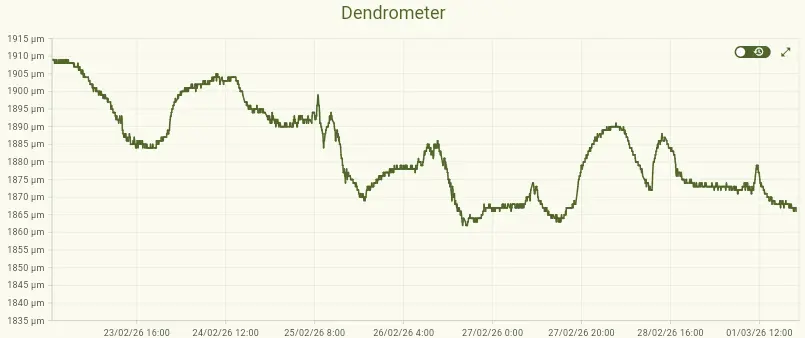
A dendrometer measures the minimal swelling and shrinkage of the tree trunk, caused by the daily water management of the tree. The trunk swells at night as the tree recovers, and shrinks during the day as the evaporation demand increases. These movements are microscopically small — less than the thickness of a hair — but they are a direct reflection of what is happening physiologically in the tree.
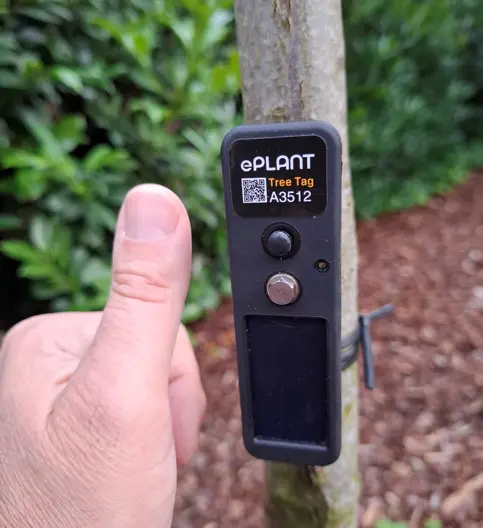
With the TreeTag from PlantData.Live, these fluctuations are measured wirelessly and continuously, with a precision of one micrometer. The platform translates that raw data into three practical indicators:
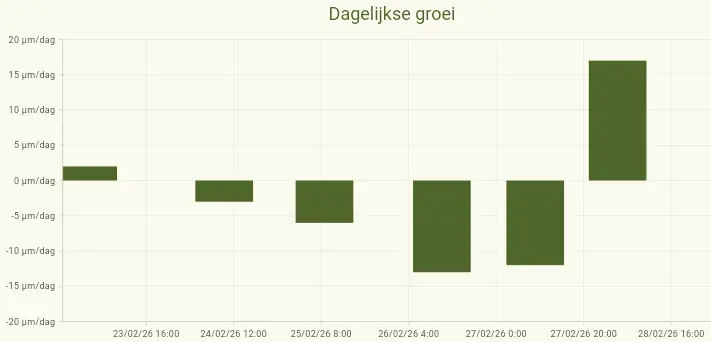
- Growth is the daily net increase in trunk diameter. During periods of good water uptake, the trunk grows slightly each night. Consistently flat or negative growth is an early sign that the tree is not recovering sufficiently — and thus that fruit growth is under pressure.
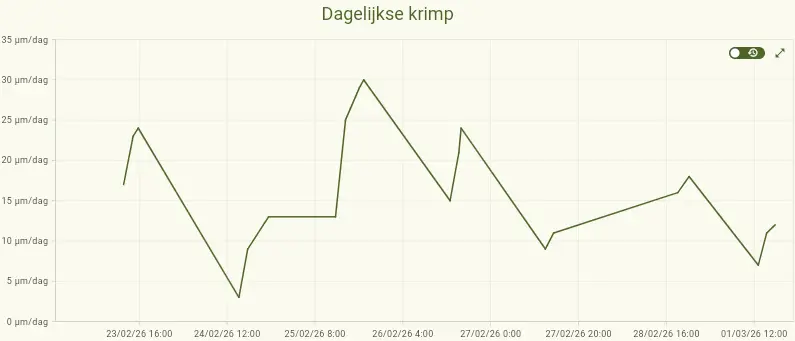
Maximum Daily Shrinkage (MDS) shows the tension in the tree sap: the greater the shrinkage during the day, the more difficulty the tree has in keeping up with evaporation. When the MDS rises independently of weather conditions, it indicates increasing water stress.
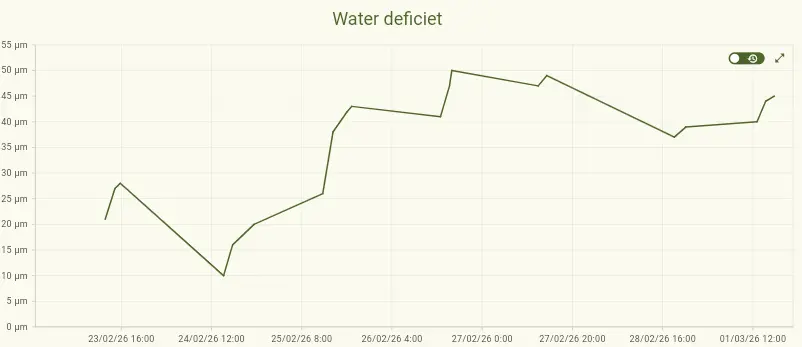
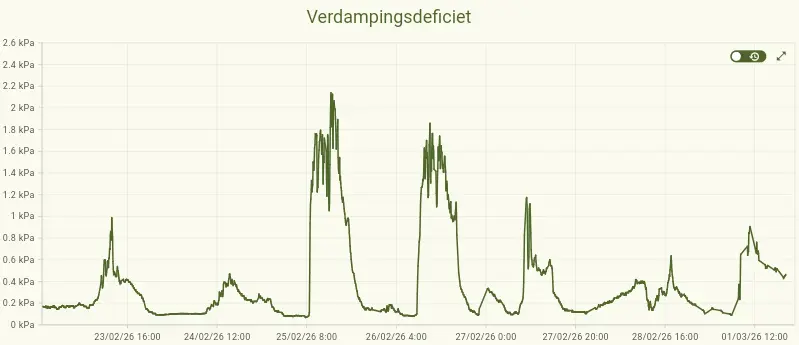
Tree Water Deficit (TWD) is the most sensitive long-term indicator. It measures the accumulated water debt of the tree over several days. An increasing TWD — even if the daily shrinkage appears stable — is a reliable signal that the tree is not recovering adequately. This pattern typically occurs when irrigation fails due to a defective dripper or a misconfigured zone.
Four concrete scenarios for the pear grower
1. Irrigation decisions based on the tree, not the soil
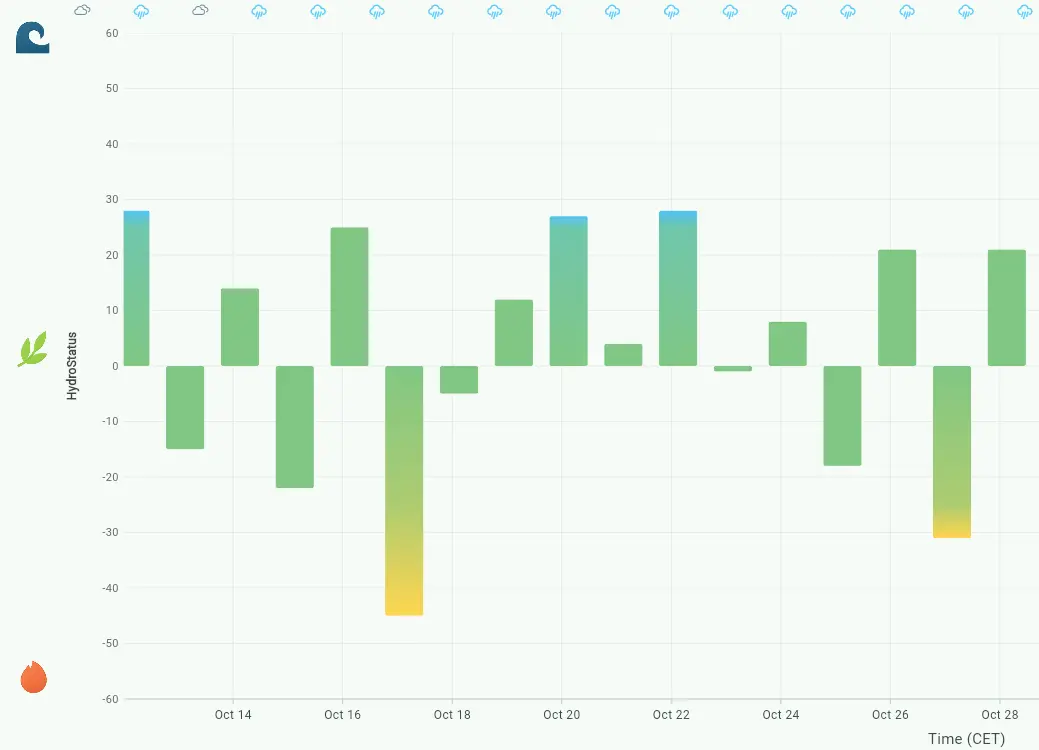
Soil moisture meters measure what is in the soil. But a tree responds to what it actually takes up — and that relationship is not always linear. Root pruning, soil compaction, or salt accumulation can cause a tree to stress while the soil appears moist. A dendrometer measures the response of the tree itself, automatically integrating all factors: soil moisture, weather conditions, root activity, and conductivity in the wood.
Research with apple trees — and the physiology is similar — shows that dendrometer-controlled irrigation can reduce water consumption by more than 38% while maintaining yield. For a sector that is increasingly facing water scarcity and rising costs, that is not a marginal gain.
2. Substantiated comparison between parcels
Every orchard is different: soil type, rootstock, planting density, exposure. A dendrometer at multiple locations allows for an objective comparison. Which plot responds the fastest to drought? Which trees recover more slowly? This information not only guides irrigation but also long-term decisions about rootstock selection, soil remediation, or planting systems.
3. Growth stage monitoring for harvest planning
Pear growth occurs in phases. During the cell formation period (early after flowering) and cell elongation (the weeks before harvest), the trees are most sensitive to water stress. Those who continuously monitor growth dynamics using a dendrometer know exactly when they are in a critical phase and can adjust their irrigation strategy accordingly. This is irrigating based on plant physiology, not on a calendar or a weather model.
4. Early detection of defects in the irrigation system
A clogged dripper, a leaking valve, or a misconfigured zone may not always be noticeable during a visual inspection. But the tree notices it immediately. A rising TWD combined with negative growth, without corresponding climate change, is a reliable signal that something is wrong with the water supply. PlantData.Live can automatically alert you to this — so you won't be caught off guard during the next inspection round.
Micrometer precision, for ten years
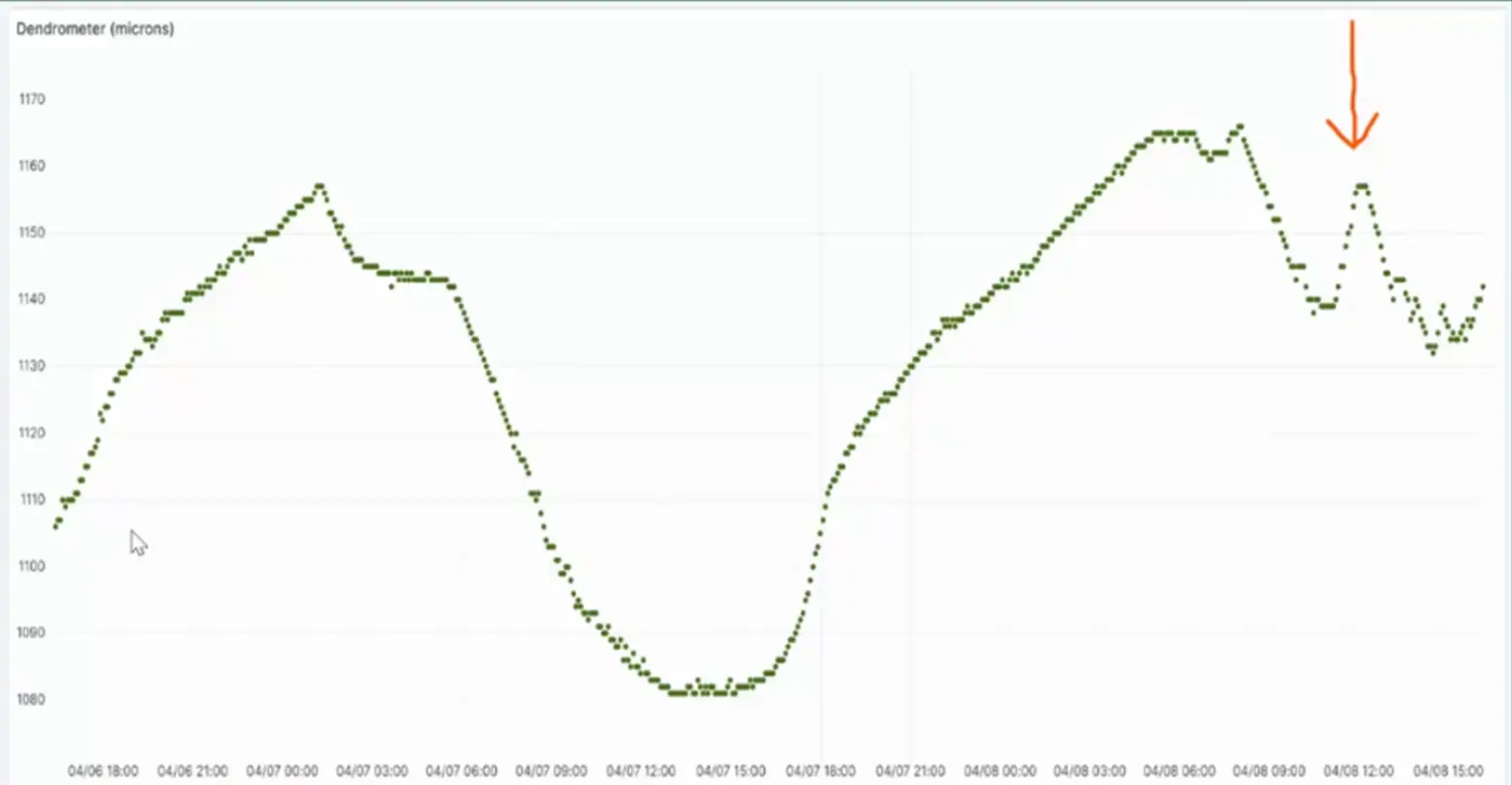
The TreeTag from ePlant — distributed in Europe by PlantData.Live — measures trunk diameter changes with a precision of one micrometer. For comparison: a human hair is on average 70 micrometers thick. On April 8, 2024, active TreeTags recorded the temporary obscuration of the sun in the diameter fluctuations of trees. A variation of a quarter of a hair's thickness — measurable, documented, and visible in the data.
The sensor operates wirelessly via LoRaWAN, requires no external power thanks to the built-in solar panel, and is designed for at least ten years of outdoor use. PlantData.Live takes care of the technical side of things for you.
Data without interpretation is noise
The added value of PlantData.Live lies not only in the sensor but in the platform that converts the data into actionable insights. Raw dendrometer readings are complex: only over longer periods, with reference trees and in combination with climate data, do patterns become readable.
The PlantData.Live platform combines:
- Dendrometer readings from the TreeTag (growth, MDK, TWD)
- Local temperature and humidity (measured at the trunk)
- Inclination measurements as an indicator of root stability
- Configurable alarms for deviations
- Export options for further analysis or reporting
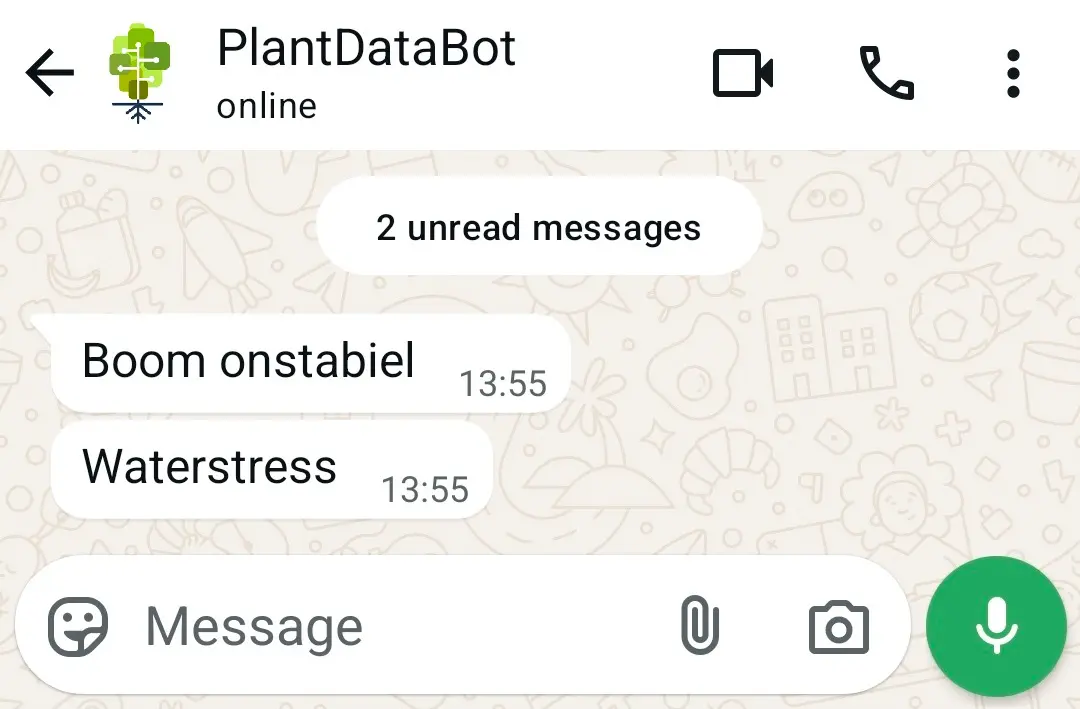
The platform is accessible via browser and mobile device. Alarms can be set based on threshold values, so you only receive a notification when action is needed.
Conclusion: the tree already knows
By the time leaves are hanging or fruits are lagging in growth, the economic consequences are already a reality.
A pear grower who waits for visible drought symptoms is waiting too long.
A dendrometer creates its own communication channel for the tree. Continuous, objective, and without the need for you to be present in the orchard.
For Conference pear growers in Belgium and the Netherlands — where the market rewards large fruits and dry summers are becoming more frequent — that is not a luxury.
Contact us to protect and guarantee your harvest.