Know today how many days of irrigation your storage basin has left
Water buffer management links your storage basins and buffers to weather, current irrigation use and history — and forecasts how long you can keep irrigating, for every strategy you consider.
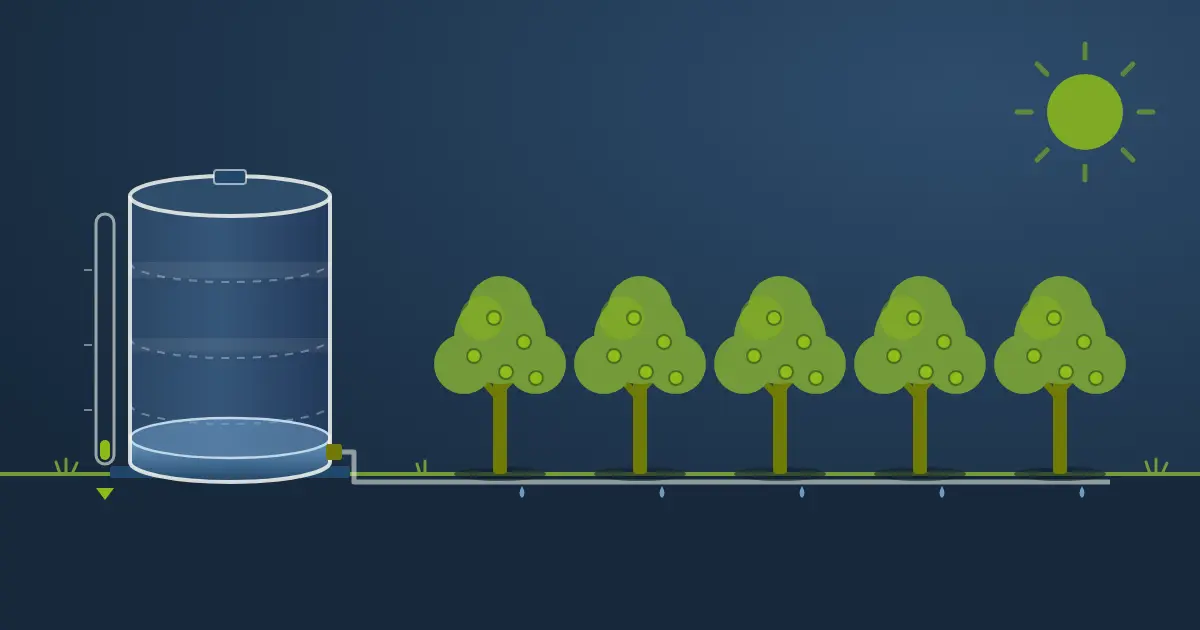
The reality on a fruit farm
Irrigation water rarely comes from the tap. You pump it from streams and canals, extract groundwater or collect rainwater and drainage water in a buffer basin. Every one of those sources is under pressure:
- Surface water → pumping from watercourses requires a notification or permit, and in dry periods extraction bans apply — exactly when your trees need water most.
- Groundwater → permits for extraction are becoming ever harder to obtain, and volumes are capped.
- Storage and buffer basins → a farm irrigating 10 hectares easily needs 5,000 to 15,000 m³ of storage. In a dry summer that basin can run empty — and you only find out when it is almost too late.
The question is not whether your water reserve can run out, but when. And that is exactly what you do not know today: how much water is left, how fast it is going, and how many days of irrigation remain.
What if your water buffer could look ahead?
Suppose you knew every morning: at my current strategy I have this many days of irrigation left. Water management then shifts from reacting to planning:
- Refill on time, while extraction from streams and canals is still allowed.
- Switch deliberately to deficit irrigation before the reserve becomes critical, instead of stopping abruptly.
- Prioritise plots — young plantings and sensitive crops first, on facts instead of gut feeling.
- Invest with confidence: your own data shows whether a larger basin or an extra source pays off.
The difference is not more work, but knowing how long your water will last.
How water buffer management works
Our central data portal brings all your water data together and turns it into one clear figure: your remaining irrigation autonomy.
Measure what you have
Level sensors on your buffers and basins continuously convert the water level into the volume you actually have available, in m³ — visible online at any moment.
Forecast what you will need
The portal combines the weather forecast, your current irrigation consumption and the history of past seasons into an expected water demand per plot.
Volume in stock plus expected consumption equals a forecast of how many days you can keep irrigating — recalculated continuously as the weather and your choices change.
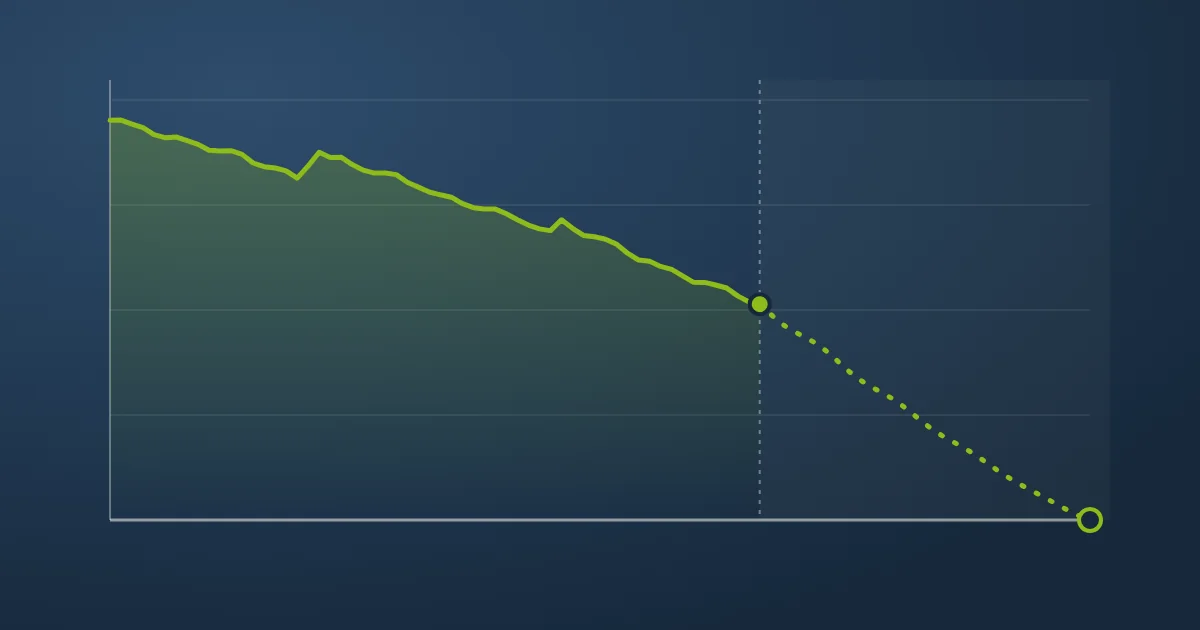
One forecast, several choices
The forecast does not show one number but a set of scenarios, so you can weigh your options:
- Full irrigation on all plots — for example 12 days remaining.
- Deficit irrigation on pome fruit — for example 21 days remaining.
- Only young plantings and sensitive plots — for example 35 days remaining.
You see immediately what each choice yields in extra days — and decide with the harvest calendar in hand.
All your sources in one picture
Whether you pump from a canal, extract groundwater or reuse drainage water: the portal tracks what comes in and what goes out.
- Current stock per basin and per buffer.
- Refill capacity of your sources, including when extraction bans apply.
- Consumption per plot, compared with previous seasons.
Why this matters now
Flanders and the Netherlands rank among the most water-stressed regions in the world, and dry summers are becoming the rule rather than the exception:
- Extraction from watercourses is regulated ever more strictly: notifications, metering obligations and temporary or even permanent extraction bans during drought.
- A full growing season of classic irrigation quickly takes 600 to 1,600 m³ per hectare — and far more in a dry year.
- A buffer basin is a serious investment in space and money; using it well starts with knowing how it fills and empties.
"Still 12 days at full irrigation, 21 days with deficit irrigation on pear: that is a decision you can make on a Monday morning — not a surprise in week three of a heatwave."
What it delivers for you
- Certainty: you know at any moment how many days of irrigation remain.
- Refill on time, within the rules — before bans or empty streams catch you out.
- Less risk of yield loss from an abrupt irrigation stop.
- Hard figures for investment decisions and permit applications.
Ready to manage your water on data instead of hope?
Request your quote or demo without obligation. Together we look at your basins, sources and plots — and at what a forecast of your irrigation autonomy can mean for your farm.
Request your quote or demo or call +32 (0)53 36 30 21
Frequently asked questions
What exactly does the portal measure?
Level sensors continuously measure the water level in your buffers and basins and convert it into available volume in m³. Combined with weather data, your current irrigation consumption and the history of past seasons, this becomes a forecast of your remaining irrigation autonomy.
Does it work with my existing basins and pumps?
Yes. The sensors are wireless and are installed on existing basins, buffers and wells — no rebuilding required.
What happens during an extraction ban?
The forecast recalculates your autonomy without refilling from that source. You immediately see how long your reserve lasts and which scenario buys you the most days.
Can I combine this with tree monitoring?
Certainly. Combined with the dendrometer you see both sides of the water balance: how much water you have left, and how much your trees really need.
What do I need to get started?
We take care of the sensors, the monitoring and the guidance. You just request a quote or demo.